Basement Water Removal
Sump pump not working or struggling to keep up? A new pump isn’t always the answer. Just call us or fill out a short form, and we’ll help you understand the next steps for repair or replacement.
When a sump pump stops working or water rises in the pit, worrying about the next storm is understandable. You don’t have to decide whether to repair or replace the pump before reaching out. Just call us or fill out the short form and describe what you’re seeing.
A qualified assessment can check the float switch, discharge line, check valve, power supply, and pump itself. A stuck switch, blocked discharge, or another system fault may be correctable. A worn or failed motor, an undersized pump, or repeated failures may make replacement the better option. If there is no existing sump system, a new installation remains a separate option.

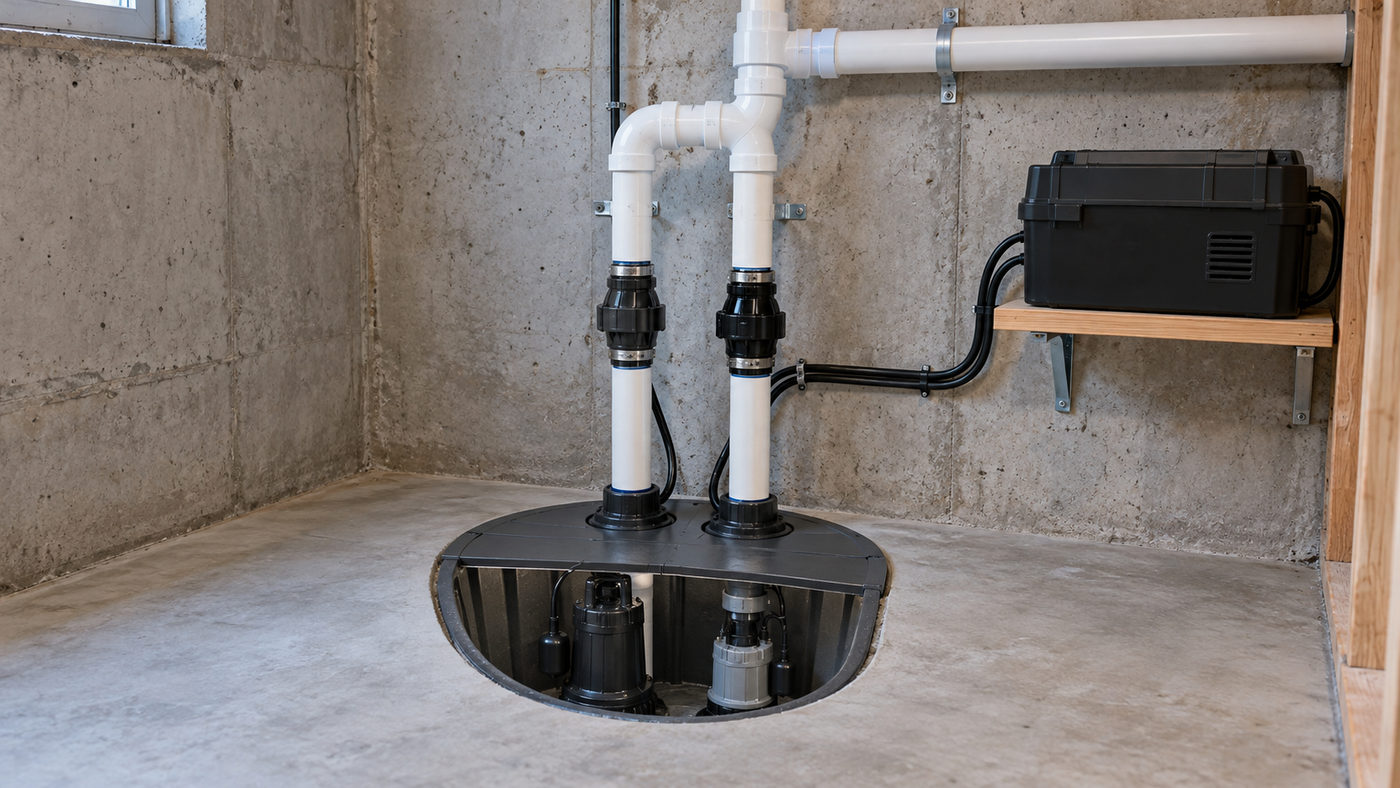
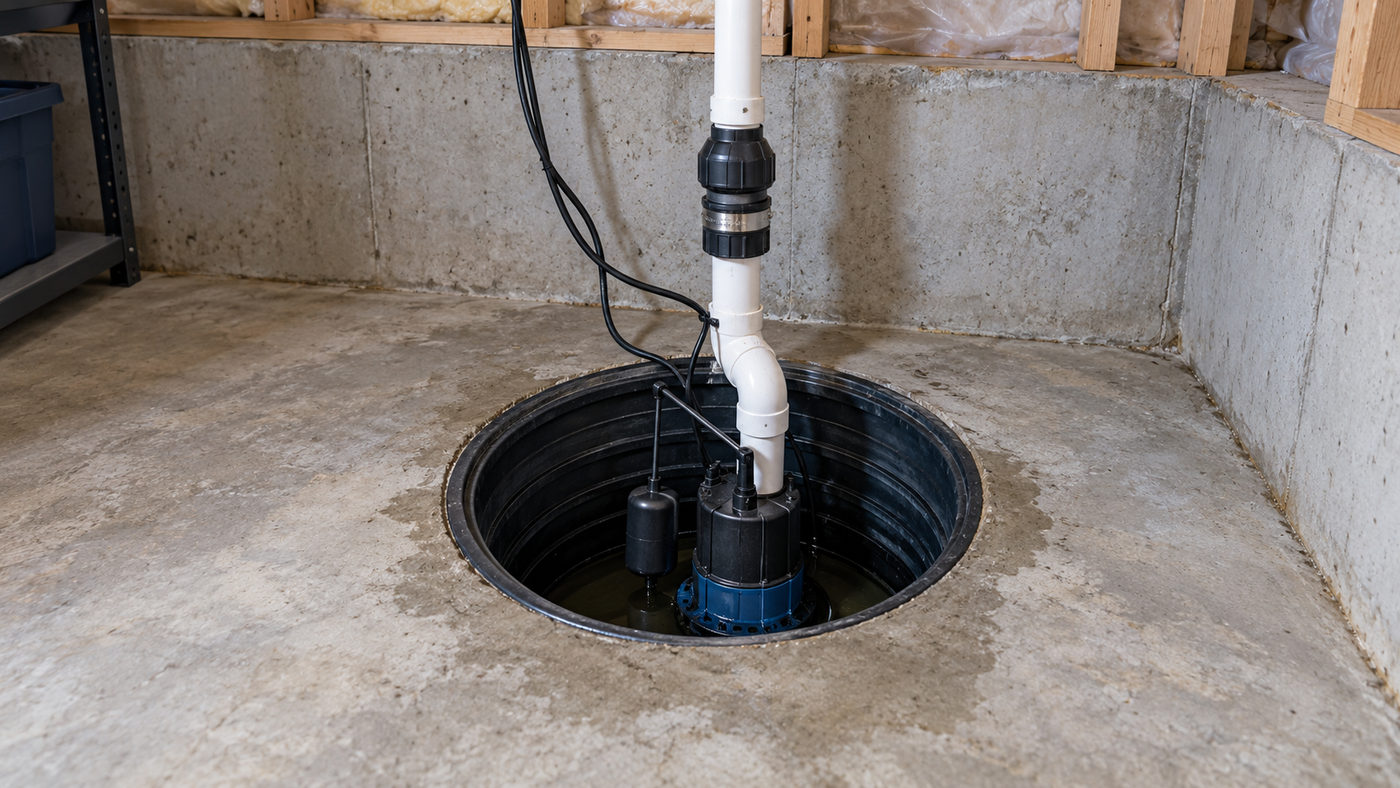
A sump pump system includes more than the pump motor. The basin, float switch, discharge piping, check valve, power supply, and drainage arrangement all affect performance. Understanding these components can help homeowners recognize problems before water reaches the basement floor.
A pump that will not start or move water does not automatically need replacement. A qualified professional can check for a stuck or faulty float switch, a blocked discharge line, check-valve trouble, and power or control problems. Some faults can be corrected, but the pump’s condition and the cause of the problem determine whether a repair is safe and worthwhile.
A worn or failed motor, an undersized pump, or repeated failures may make replacement the better option. Unusual noises or a pump that will not start can also have other causes, so the system should be assessed before choosing a new unit. Replacement equipment should match the basin, incoming water volume, and discharge requirements.
A primary sump pump removes collected groundwater from a basin and sends it through a discharge line. Pump selection should account for expected water volume, vertical lift, and piping resistance. The basin must provide sufficient space for reliable operation and maintenance access.
A battery backup system can provide additional protection when the primary pump loses power or fails. Backup performance depends on battery condition, pump capacity, and incoming water volume. These systems require maintenance and should not be assumed to provide unlimited pumping time.
A pump may operate incorrectly if the float switch becomes obstructed or the basin is too small. Debris and sediment can also interfere with moving parts. The basin and switch arrangement should allow the pump to start and stop as intended.
Collected water must be discharged to an appropriate location. Poorly routed discharge lines can allow water to return toward the foundation, while blockages or freezing may prevent the system from operating correctly. Discharge arrangements must follow applicable local requirements.
Routine checks can help identify developing problems. Homeowners should follow manufacturer guidance for testing the pump, checking the basin, and maintaining backup equipment. Electrical repairs should be handled by appropriately qualified professionals.
Repair costs depend on the fault, the parts needed, and the work involved. The ballparks below cover replacement and new installation, not repair.
As a ballpark, replacing a pump in an existing pit with usable piping can run $350–$1,000 installed. Installing a new submersible pump and pit with a straightforward above-ground discharge can run $800–$2,000 installed. These are different jobs with different equipment and installation needs.
Pump size, pit condition, electrical work, more involved discharge routing, and battery backup can all affect the final price. The best way to understand the cost for your home is to request a project-specific estimate.
Call (215) 486-0519 Request an Estimate
Just call or click “Request an Estimate” and fill out the short form to tell us what’s happening in your basement.
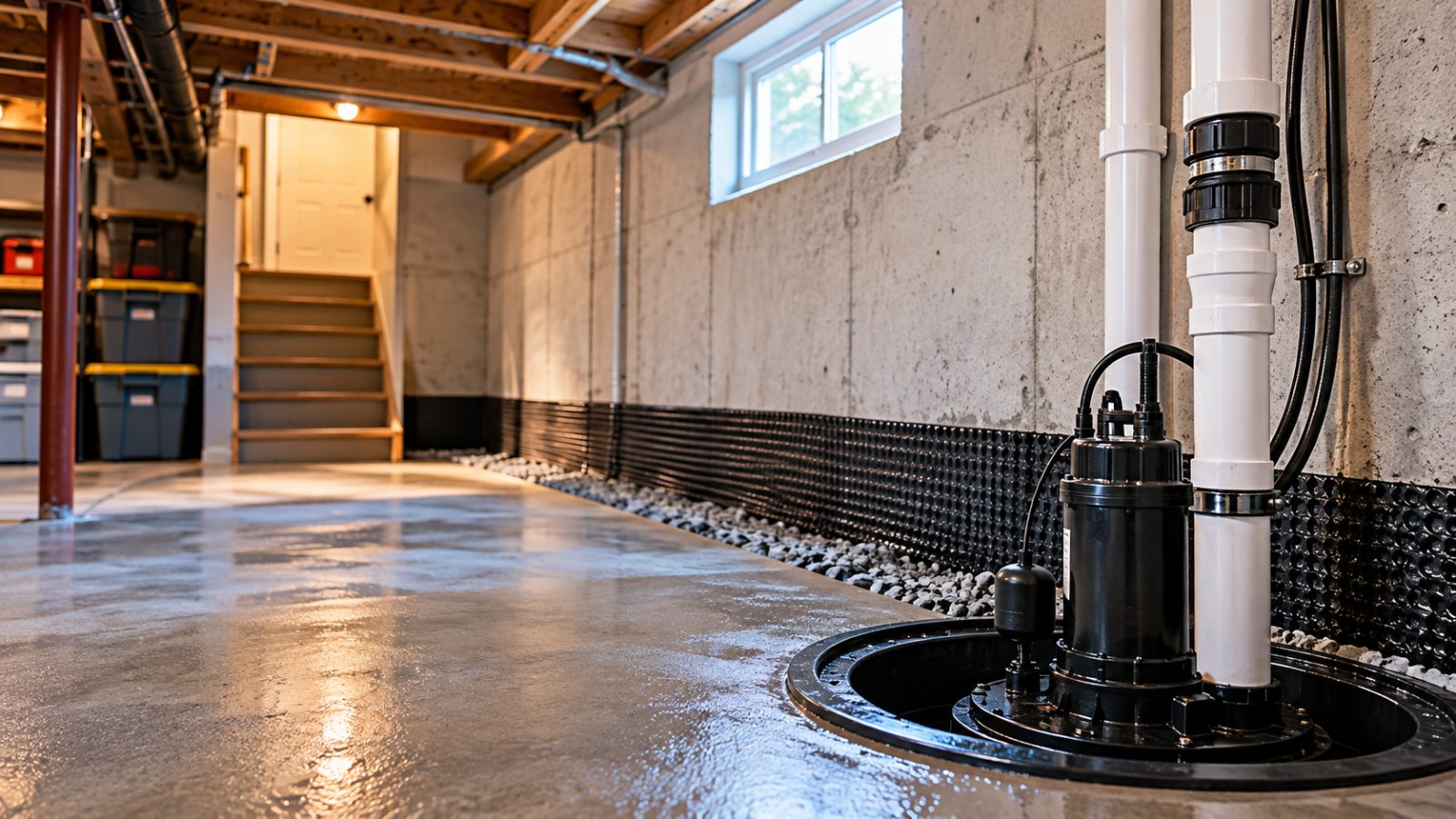
The pump, basin, drainage, and discharge line should function together.
Pump capacity and backup requirements depend on the basement's water conditions.
Routine testing and inspection can help identify problems before a major storm.
Water should be directed to a suitable location without creating new drainage problems.
Getting started is easy. Just call us or click “Request an Estimate” below and fill out the short form. Tell us what the pump is doing, and we’ll help you understand the next steps for repair or replacement. You don’t need to choose a new pump before reaching out.
Call (215) 486-0519 Request an Estimate
A few details are enough to get the request started.
Identify flooding history, groundwater conditions, and existing drainage equipment.
Evaluate accessible pump components, basin conditions, and discharge routing.
Determine whether repair, replacement equipment, or a new system is appropriate based on the diagnosed fault and water conditions.
Carry out the agreed work and verify operation under appropriate test conditions.
Explain routine testing, backup limitations, and common warning signs.
A stuck or faulty float switch, blocked discharge, check-valve issue, or power or control fault may be repairable. A worn or failed motor, an undersized pump, or repeated breakdowns may make replacement more sensible. A qualified professional needs to assess the pump and system before choosing either path. Avoid electrical work around water.
Replacing a pump may use an existing pit and piping. A new installation can also require a basin, a suitable discharge route, and electrical work, so the two jobs should not be compared as though they include the same parts.
A properly selected and maintained backup can run a pump when power fails, but capacity and run time vary. Test both the primary and backup systems according to their equipment instructions.
It can remove water that reaches its basin, but it does not seal a crack or correct a separate source of water entry. The crack and surrounding drainage need their own evaluation.