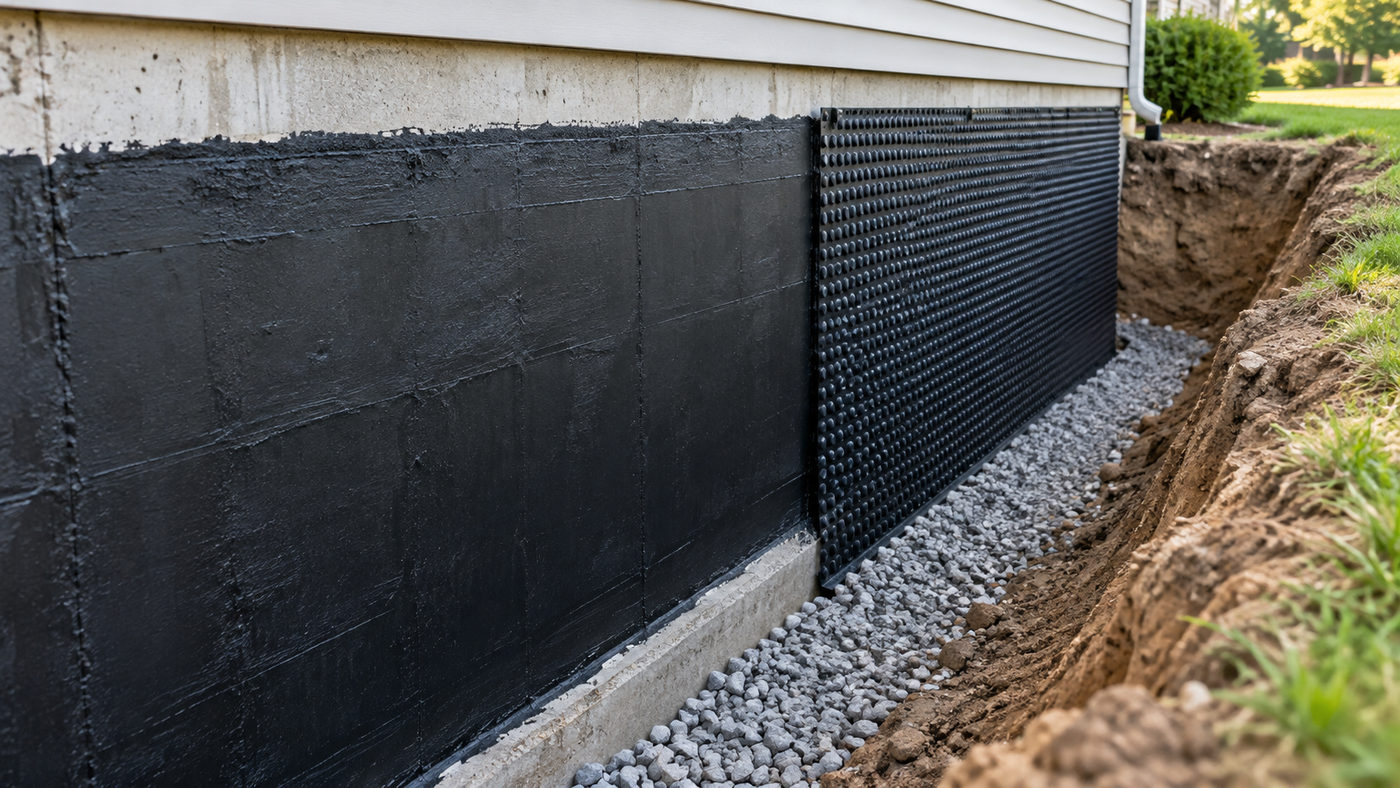
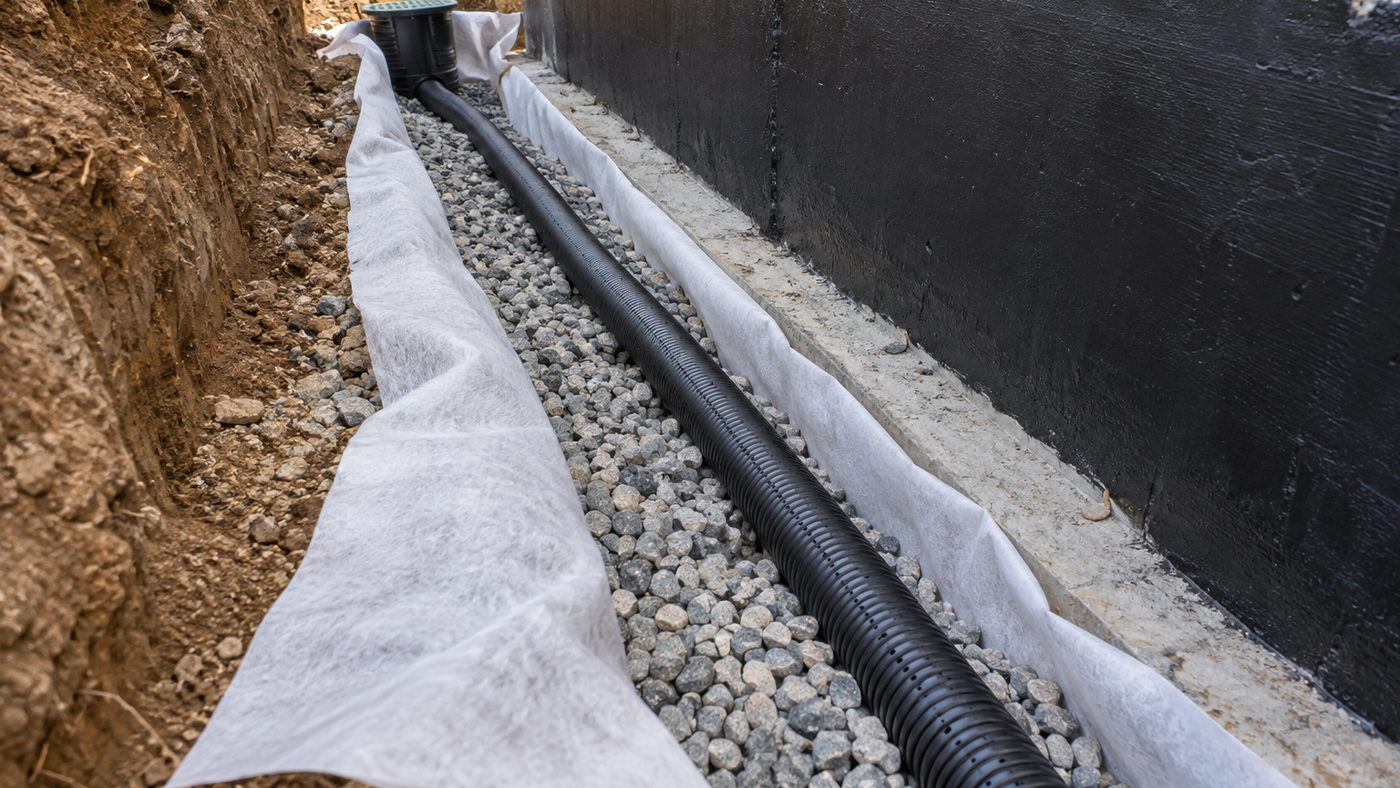
Exterior Foundation Water Protection
Worried about water finding its way through your basement walls? Getting help starts with a simple phone call or filling out a short form. Tell us where the water appears, and we’ll help you understand your options.
When water shows up along a basement wall after another storm, it’s hard not to worry about the next one. You don’t need to decide how much work your foundation needs before reaching out. Just tell us where the leak appears and when it happens.
Exterior waterproofing addresses water at the outside foundation wall, before it passes through cracks or joints. The work may involve exposing an affected section, preparing and protecting the wall, and improving drainage. It does not automatically mean digging around the entire house. The right approach depends on the water source, foundation condition, and access.

Exterior waterproofing is intended to reduce water intrusion at the outside foundation wall. A complete approach considers both the waterproofing barrier and the movement of water through the surrounding soil. Drainage conditions, surface grading, and discharge arrangements can be just as important as the membrane itself.
Exterior waterproofing may require excavation beside the foundation to expose the affected wall. The excavation depth depends on the foundation and repair area. Underground utilities, neighboring structures, soil stability, and safe access must be considered before work begins.
Waterproof membranes create a protective barrier on the outside of foundation walls. Depending on the project, liquid-applied or sheet materials may be used. Proper surface preparation, application, sealing of transitions, and protection during backfilling are important for performance.
Drainage near the foundation footing can help collect and redirect groundwater. Depending on the site, drainage piping, suitable aggregate, and filter materials may be included. The system requires an appropriate outlet or collection point and should account for local discharge requirements.
When an exterior foundation wall is exposed, accessible cracks and joints can be evaluated before waterproofing materials are applied. Stable cracks may be suitable for targeted repair, while cracks associated with structural movement may require engineering assessment.
Water flowing toward the house can increase moisture exposure around the foundation. Soil grading, gutters, downspouts, and nearby paved surfaces influence runoff. Correcting surface drainage conditions may help reduce the amount of water reaching below-grade walls.
Some exterior waterproofing systems include drainage boards or protective layers over the waterproof membrane. These components can help direct water downward and protect the membrane during backfilling. Material selection depends on the system design and site conditions.
After waterproofing components are installed, excavated areas must be backfilled appropriately. Drainage materials should remain protected, and final grading should encourage surface water to move away from the foundation. Landscaping, walkways, or other disturbed features may require restoration depending on the project scope.
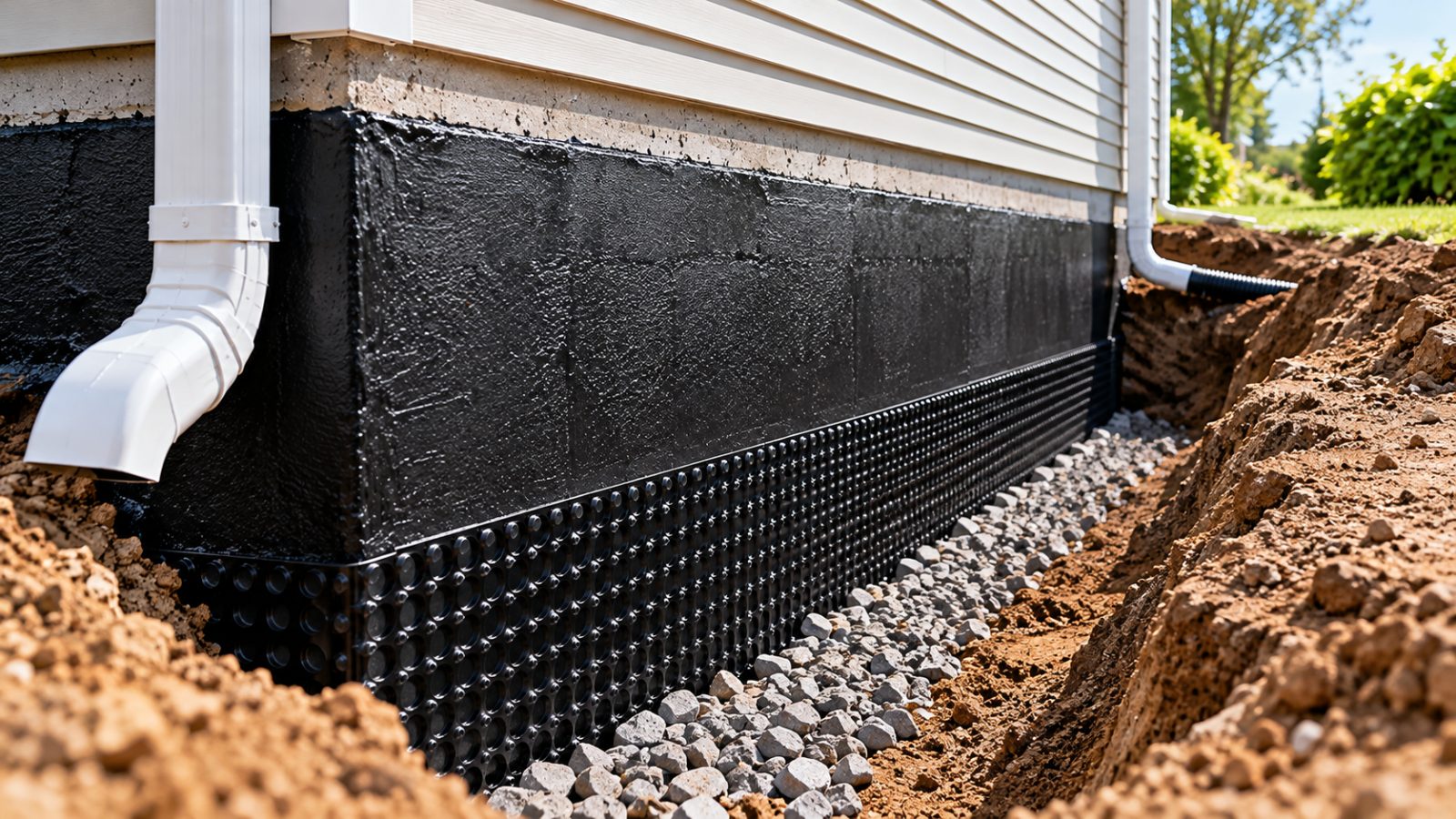
As a broad ballpark, exterior waterproofing projects can run $7,000–$15,000, while full excavation with drains and a waterproof membrane can exceed $20,000. Neither figure is a separate price for one accessible wall section, and not every home needs full excavation.
Wall length, excavation depth, access, buried utilities, drainage design, and restoring landscaping or paving all affect the final price. The best way to understand the cost for your home is to request a project-specific estimate.
Call (215) 486-0519 or fill out the short form and tell us what’s happening in your basement to get the request started.

Exterior waterproofing focuses on limiting moisture intrusion before it passes through the foundation.
Waterproof membranes should be evaluated alongside foundation drainage and surface runoff.
Access, utilities, soil conditions, and nearby structures can affect the project.
Backfilling, grading, and disturbed property features should be considered during planning.
Getting started is easy. Just call us or click “Request an Estimate” below and fill out the short form. Tell us where and when you see the water, and we’ll help you understand the next steps for your home.
Call (215) 486-0519 Request an Estimate
You don’t need to know the repair method before reaching out.
Review visible moisture, foundation construction, grading, and exterior access.
Determine the appropriate waterproofing materials, drainage components, excavation requirements, and discharge arrangements.
Complete necessary utility-location procedures, establish safe work areas, and expose the affected foundation surfaces.
Prepare the foundation walls and install the specified repair materials, waterproof membranes, and drainage components.
Complete the agreed backfilling, grading, and restoration work while protecting the installed waterproofing system.
Explain drainage considerations, surface runoff management, and signs of future moisture problems.
No. The area that needs excavation depends on where water enters, access to the foundation, and how drainage works around the property. A single exposed section and a longer excavation are different scopes.
Water flowing toward the foundation can keep pressure on below-grade walls. Surface drainage, foundation drainage, and wall protection may need to work together; a membrane alone does not correct every runoff problem.