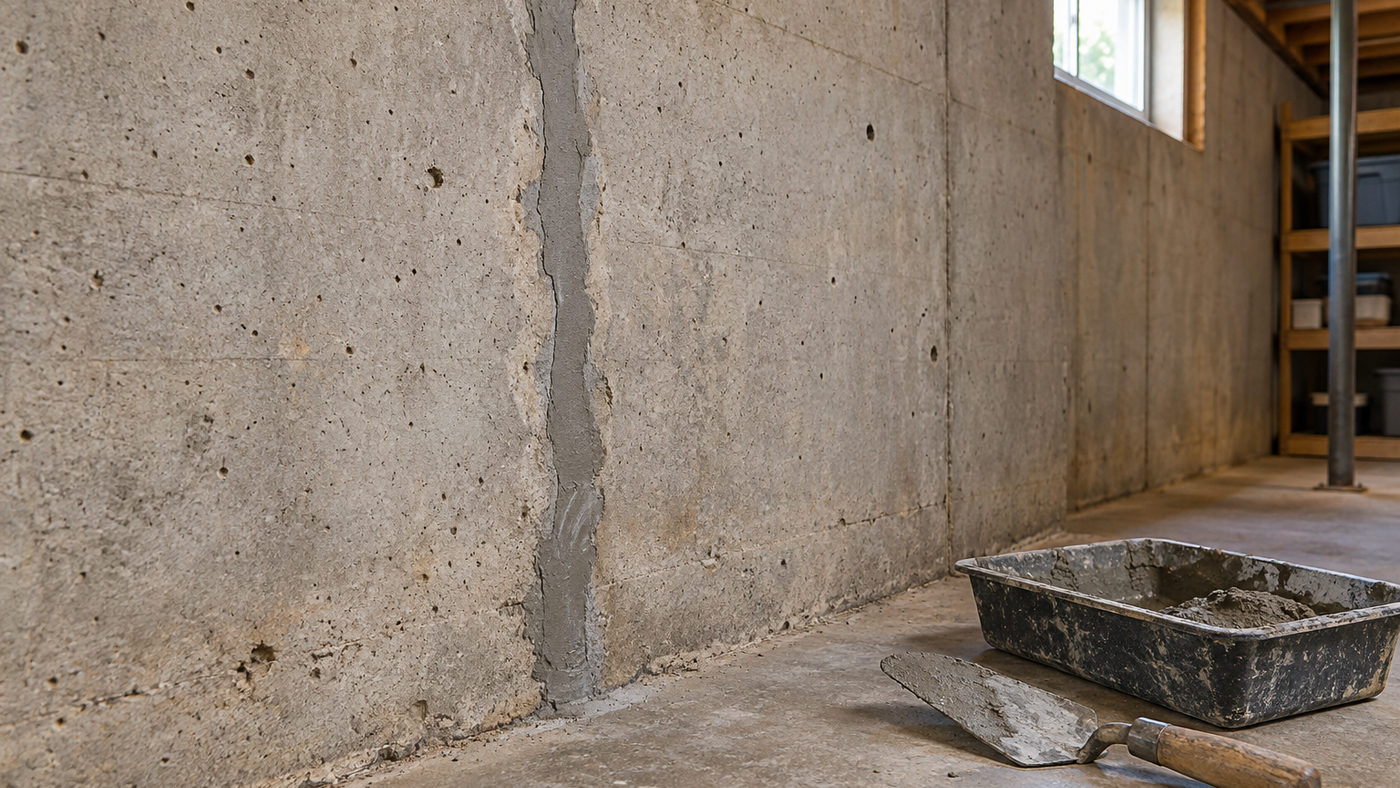
Vertical crack in a concrete basement foundation wall

Foundation Leak Solutions

Foundation and Basement Crack Repair in Bensalem

Worried about water coming through a basement crack? Getting help starts with a simple phone call or filling out a short form. Tell us what you’re seeing and we'll let you know your options.

Request an Estimate

Just tell us what’s happening.

By submitting, you’re requesting a call or email about your project. Privacy Policy

Help for a Leaking Foundation Crack

Seeing water come through a basement crack can leave you worried about your home and what happens next. You don’t need to diagnose the crack or choose a repair before reaching out. Just tell us where the water appears, when it leaks, and whether you’ve noticed any changes.

Some stable cracks can be sealed to control water entry. A horizontal or widening crack, a bowed wall, or visible displacement should be evaluated by a qualified structural professional before being treated as a simple leak. The right assessment helps determine the next steps for your home.

Request an Estimate

Basement Waterproofing in Nearby Communities

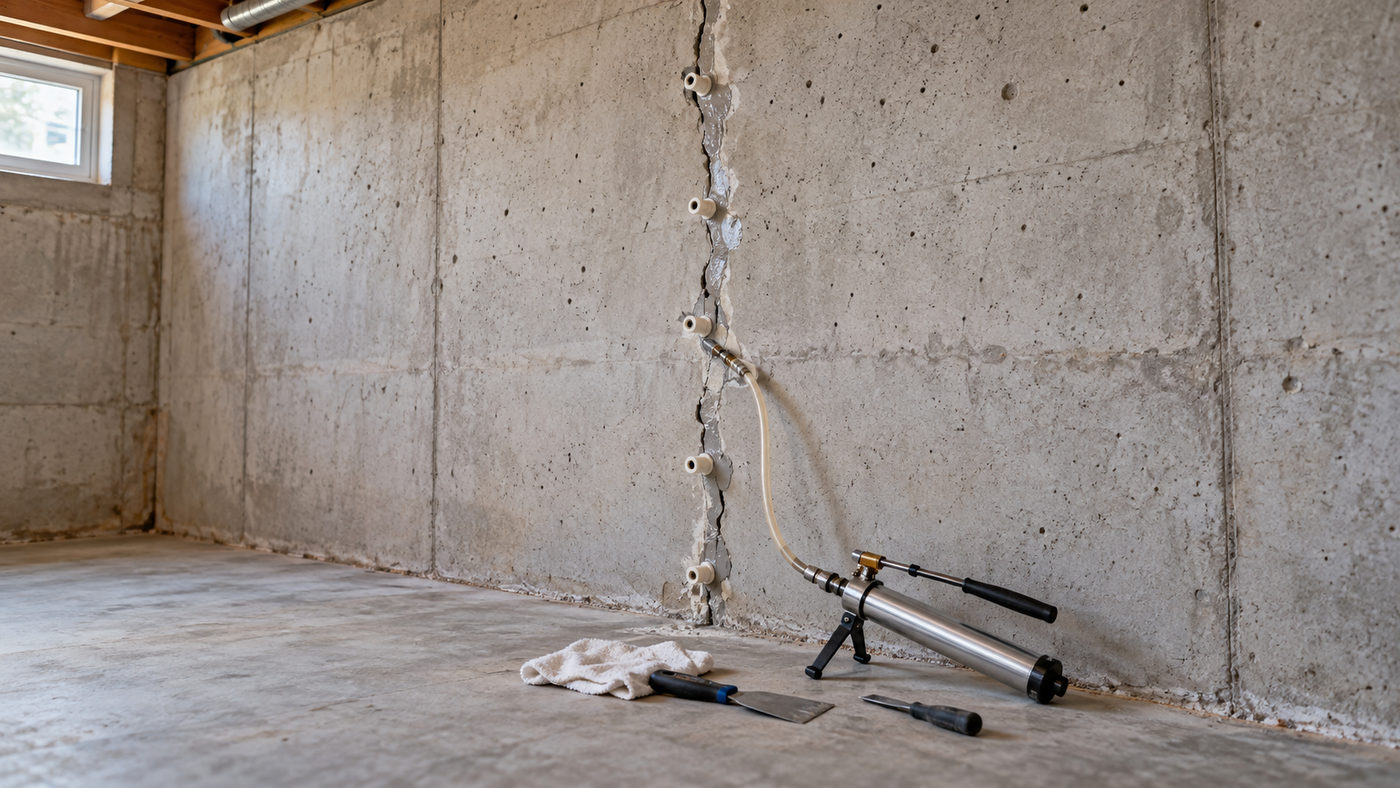
Injection ports along a vertical basement wall crack (illustrative)

Common Foundation Cracks and Repair Options

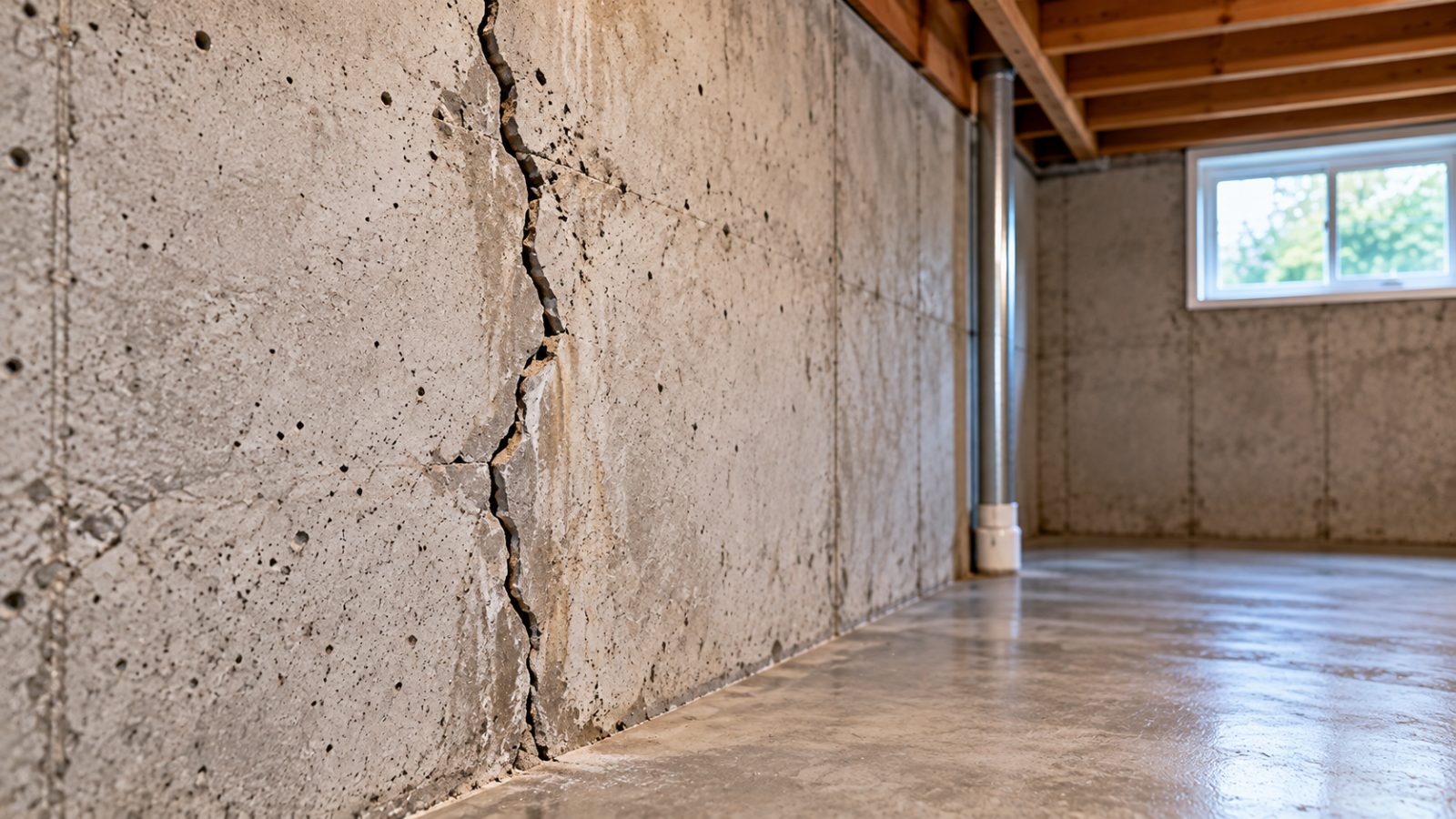
Concrete and masonry foundations can develop cracks from shrinkage, settlement, soil pressure, or structural movement. Not every crack indicates a serious structural problem, but leaking cracks deserve attention. A suitable repair should account for both the visible opening and the conditions that allow water to reach it.

Vertical Foundation Cracks

Vertical cracks commonly appear in poured concrete foundation walls. Some develop as concrete cures, while others result from movement or changes in loading. Stable cracks that allow water to enter may be suitable for injection or sealing. The appropriate material depends on the crack condition, moisture level, and purpose of the repair.

Horizontal Foundation Cracks

Horizontal cracks can be associated with pressure against the foundation wall. They deserve particular attention when accompanied by bowing, displacement, or widening. Waterproofing materials may control some water intrusion, but they do not correct structural movement. Significant structural concerns should be evaluated by a qualified structural engineer before a repair plan is selected.

Stair-Step Cracks in Masonry Walls

Stair-step cracks follow mortar joints in block or brick foundations. They may develop from settlement, soil pressure, or movement in the structure. Some are primarily moisture entry points, while others indicate conditions requiring structural attention. The crack pattern and surrounding wall condition should be assessed before repair.

Basement Floor Cracks

Basement floor cracks may result from concrete shrinkage, settlement, or movement beneath the slab. When groundwater pressure rises, moisture can appear through some floor cracks. Depending on the conditions, the appropriate solution may involve sealing the crack or improving drainage beneath the floor.

Wall-to-Floor Joint Leaks

Water appearing where the basement wall meets the floor may indicate groundwater pressure around the foundation. Applying sealant to the visible joint does not always address the underlying cause. Interior perimeter drainage may be appropriate when water repeatedly enters along this area.

Polyurethane and Epoxy Injection

Certain stable cracks in poured concrete walls can be repaired using polyurethane or epoxy injection. Polyurethane materials are commonly used to control water intrusion, while epoxy may be appropriate for specific structural bonding applications. The selection depends on the condition of the concrete, crack movement, and repair objective.

Foundation Drainage Considerations

A repaired crack may remain exposed to groundwater if drainage problems continue. Gutters, downspouts, grading, and saturated soil can influence how much water reaches the foundation. Addressing these conditions may help reduce the likelihood of recurring moisture problems.
How Much Does Foundation Crack Repair Cost in Bensalem?

As a ballpark, sealing one nonstructural crack can run $200–$1,000 per crack. Professional pressurized injection is a different repair and can run $800–$1,500 per crack.

Crack size, access, moisture, repair material, and signs of movement affect the price. Structural evaluation and structural repairs are separate from a straightforward leak seal; a qualified professional should evaluate a widening or displaced crack.

Call (215) 486-0519 or fill out the short form to request a project-specific estimate for your home.

Sealed vertical crack in concrete foundation wall (illustrative)

What Matters in a Leaking Crack Repair

Understand the crack first

The crack pattern and evidence of movement help determine whether sealing or further evaluation is appropriate.

Address moisture entry

A repair should consider how water reaches the crack, not only the visible opening.

Use appropriate materials

Injection and sealing products have different applications depending on the repair objective.

Recognize structural concerns

Waterproofing should not be presented as a substitute for necessary structural repairs.

Take the First Step Toward Fixing the Leak

Getting started is easy. Just call us or click the button below that says "Request an Estimate" and fill out the short form and tell us where the water is coming in. Take the first step toward getting the leak addressed and your basement dry again.

Call (215) 486-0519 Request an Estimate

A few details are enough to get the request started.

What a Crack Repair May Involve

Inspect the crack

Review the crack's location, direction, width, moisture conditions, and visible movement.

Determine the repair approach

Consider whether targeted sealing, drainage improvements, or structural evaluation is appropriate.

Prepare the surface

Clean and prepare the affected area according to the selected repair system.

Complete the repair

Apply the specified materials following appropriate installation and curing requirements.

Review drainage

Consider exterior runoff and other conditions that may continue directing water toward the foundation.

Foundation And Basement Crack Repair Questions

Can a leaking foundation crack be repaired from inside?

A stable, nonstructural concrete-wall crack may be suitable for an interior injection repair. The right material and method depend on the crack, water pressure, and whether the wall is moving. Sealing the visible opening does not solve every drainage problem.

When does a crack need more than waterproofing?

A horizontal or widening crack, stair-step cracking in masonry, a bowed wall, or visible displacement can point to movement. A qualified structural professional should evaluate those signs before the crack is treated as a simple leak.

Why does water show up where the wall meets the floor?

That joint can become an entry point when groundwater builds up around or beneath the foundation. The solution may involve perimeter drainage rather than sealing one visible spot.

Basement Waterproofing Services in Bensalem, PA